

Preserving Vancouver’s Architectural Legacy with Patrick Campbell
How the Eames fiberglass chair can be a catalyst for a life in design

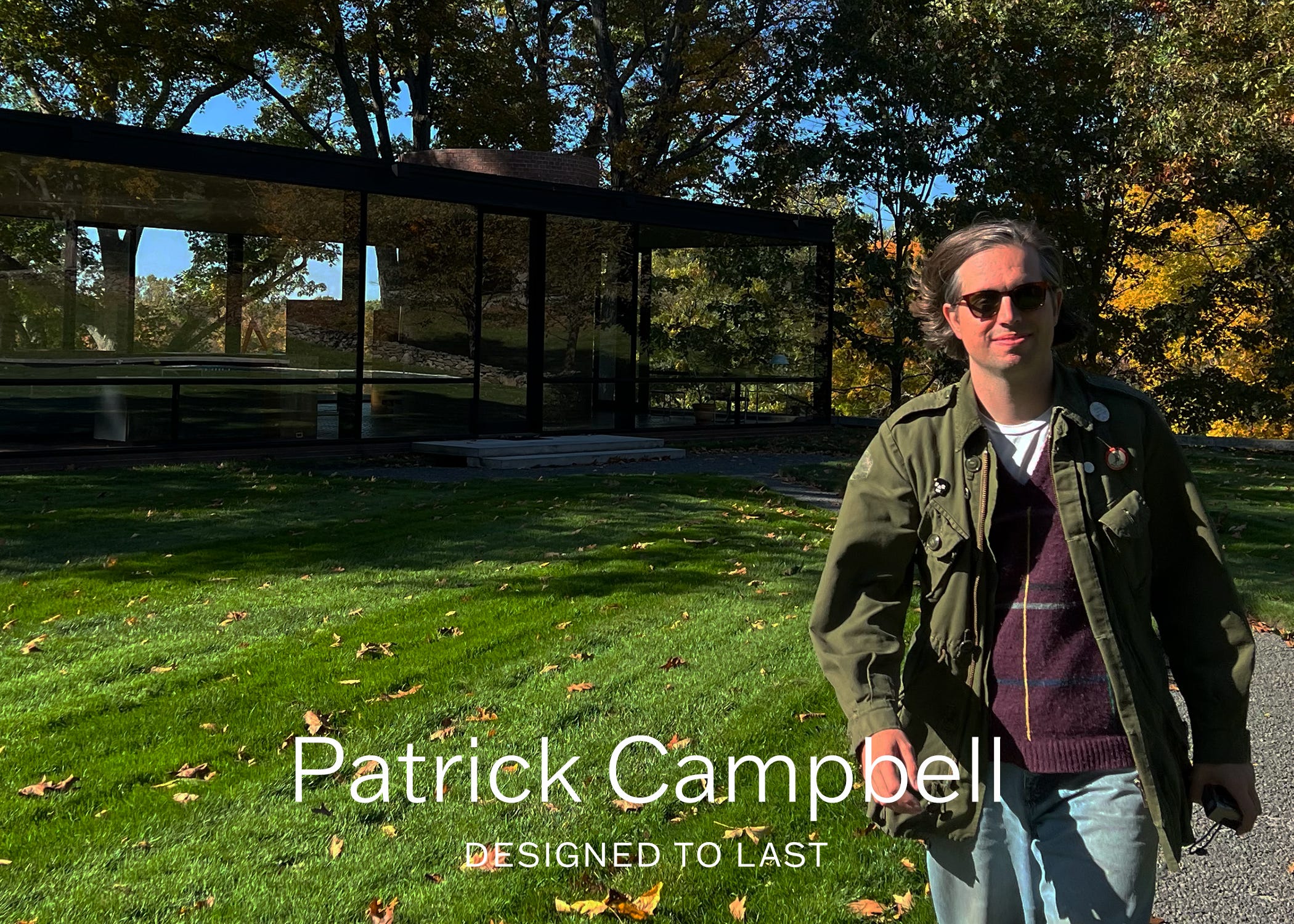
Patrick Campbell is a Vancouver, B.C. based realtor, design enthusiast, and one of the founding partners of Department of Interest. Together, alongside his business partner Christopher Boyd, Patrick finds, documents, and represents some of the finest architectural homes here on the West Coast.
I first met Patrick a few years ago in Vancouver through mutual friends, and have been fortunate enough to work together with him on a few projects throughout the years.
In todays conversation we discuss;
How a simple object like an Eames fiberglass chair can be a catalyst for a life in design
Where he travels to get inspired
Why some of the most significant homes in B.C. are being torn down
and much more
Nick: Most of our readers here at Designed to Last aren’t based in Vancouver, so they may not be familiar with what you do at Department of Interest. Do you mind giving us a brief intro to DOI and how you started it?
Patrick: Department of Interest was founded to represent architectural homes in Vancouver, whether they be mid-century, modern, contemporary, or even heritage restorations.
Essentially, I was going to open houses and I was really unimpressed with the level of care I was seeing in how people marketed these homes. I come from fashion and contemporary art, so I thought mapping those skills I learned there into the real estate world - combined with my existing knowledge of architecture and design - could create a really interesting way to represent these homes. But also to promote Vancouver heritage retention.
We lost a lot of houses in Vancouver over the last 30 years. A lot of really nice stuff has been bulldozed, and I just felt that if you draw attention to it and present it more like an art object, people are gonna be more inclined to, A, buy them and B, keep them around.
It morphed slowly because originally I was selling mid-century modern and 20th-century design furniture, and then I took a break from it. But we would talk about architecture on that account where we sold furniture, and then it slowly morphed into selling houses and not selling furniture anymore.
And so, that’s where Department of Interest started.
Yeah, that’s interesting because that’s similar to how I ended up starting Designed to Last and getting interested in design. My family home that I grew up in in Victoria, we’d owned it since the late-’50s, and all the furniture I grew up around, I thought was just kind of old junk as a kid.
Then when I got older, I started realizing, oh, this is a Hans Wegner Wishbone Chair, and this is this beautiful Danish teak credenza.
When I moved into my first place during university, I started going to my mom’s house and taking stuff and refinishing it. I started buying and refinishing furniture, and then selling some of it to buy new pieces.
Now that whole market is pretty crazy.
Yeah, a lot of people popped up as resellers and antique dealers. I remember when I first started getting into buying chairs, refurbishing them, and flipping them, there weren’t a lot of people doing it, especially not people my age.
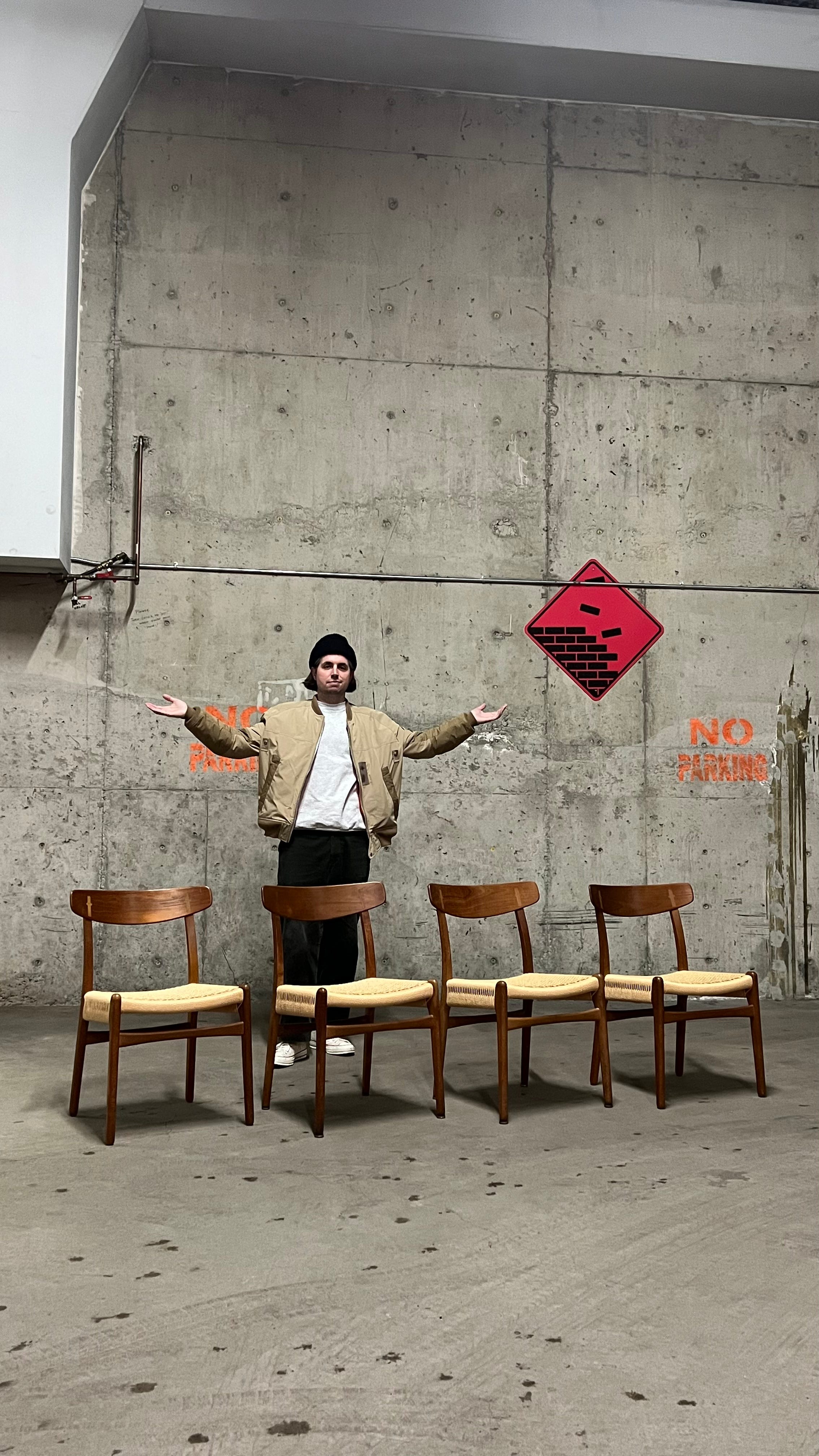
I started in my early 20s and a lot of people were like, “Why are you so obsessed with chairs?” At one point my studio had like 70 chairs in it, all in various degrees of restoration - but I’ve whittled that down now.
The Eames Shell Chair is like a gateway drug. You start there and then you go deep, deep down a rabbit hole.
Yeah. And was that all in Vancouver? Are you from here?
No, I’m from Abbotsford, about 45 minutes east of here. I started it out there. That’s where the bug hit me, which is interesting because you don’t think of Abbotsford and design, but there was some cool stuff out there. There’s actually a Fred Hollingsworth house in Abbotsford that not a lot of people know about, the Trethewey House.
But funny enough, I really got into it through building custom cars. My uncle and I got really into building period-correct early-’60s American custom cars. From that, you start thinking, “Well, I want my house to match my car.” Then you discover Eames chairs and you’re off to the races.


Yeah. I guess, like, what was that rabbit hole for you? ‘Cause I know you’re also super into skating, you’re into golfing, you’re into cars and the art world.
What specifically was the catalyst that started everything?
Man, a really bad Canadian version of an Eames chair. I was young and I didn’t know anything, but I was like, “Oh, it’s green and fiberglass. This is sick.”
Then I started going to yard sales and slowly building my collection. Eventually, I bought my first Eames chair and started perusing Craigslist.
In the beginning, you don’t know anything, so you’re just going off instinct. Because of the cars, I was attracted to what you’d call atomic stuff. I was after fiberglass and molded plastic.
Then I started digging through books. The internet was definitely a thing, but design wasn’t as popular then as it is now.
When I moved to Vancouver to go to art school, I started spending time in the library at Emily Carr. They had books on design, and I could actually start putting names to things and think, “Oh, that’s what this chair is. That’s who these guys are.”
So I spent a lot of time in the library teaching myself.
Yeah. I think even now it’s odd with architecture and design. I feel like it’s weirdly gatekept a little bit compared to other interests.
Even though I started my research post-internet, I still had to learn a lot of what I know now from books.
When I started collecting design and architecture books, I realized a lot of the homes, objects, and furniture aren’t even online anywhere, or if they are, there’s very little information on them.
That’s why I feel like what you do is such a valuable resource for people. Most of the homes you show and talk about are things that people don’t have access to see, obviously because they’re private homes.
Is that part of why you do what you do? To democratize things and become a resource?
Yeah, definitely.
The sharing of information, and also recording Vancouver’s architectural and design history, is really important. Some of the houses I’ve talked about are gone already, so getting that on record felt super important.
There are also people like the West Coast Modern League, a nonprofit society. They do a really good job documenting places as well. But I have a different audience than the people who follow the League, so I think the more people disseminating knowledge of Vancouver design, the better.
If I can get one person stoked on a chair or a house, then I think I did my job, and I’m happy with that.
You talked about it a bit earlier, but I think a lot of people don’t realize how many of the amazing homes we had here have already been bulldozed. Do you see a solution to that?
Is it an ignorance thing, people are bulldozing it because they don’t know what they have, or is it mostly because of the house prices?
It’s honestly a lot of factors.
In the beginning, people didn’t know what they had, and they didn’t really care what they had.
Then it got to a point where real estate became so expensive, and a lot of these mid-century houses are quite small in scale. They’re often on pretty prestigious lots, but with a tiny footprint, and it’s hard to justify a 1,700 square foot house on land you’ve paid $5 million for. So they get bulldozed.
Also, the city does nothing to protect them. We don’t have anything like the Mills Act in California, where you get tax credits and rebates if you preserve a house that meets certain criteria. We don’t really do things like that here. I don’t know why we don’t. I wish we did.
I wish we had stronger protocols in place to save these houses, because even to this day, things are still getting bulldozed that really should be preserved.
When you’re looking for inventory for DOI, how do you know when something is the right fit for you and your business partner?
You can just tell right away.
Just like a feeling?
Yeah, it’s a feeling. And you get a sense from the owner, like what their vibe is. I usually know before I’ve even walked in the house. You can just tell as soon as you see it, you’re like, “Oh yeah, this is great.”
What do you feel are some of the most significant homes here in B.C.?
The most significant home in Vancouver, on my list, would be Daniel Evan White’s Taylor Residence. To me, that’s the single greatest piece of residential architecture, probably in Canada. That is at the top.


Arthur Erickson’s Eppich House II is another one. That house is super cool. It would be a difficult house to actually live in though, because it’s the complete package. The furniture would have to stay with the house. You can’t change a thing.
For a contemporary home, Refolded House by MacLeod Bovell would be another one. That’s an example of a client who had the willingness to take the design as far as it could go. That’s when you get a true patron of architecture. She really pushed it, which is super cool to see, and not a lot of people do that in the city. Some of it works, some of it doesn’t, but the fact that she had the guts to take those chances was really nice to see.
Aside from Vancouver, where do you like to go for inspiration? I know you do pretty frequent road trips to California.
Yeah, my wife and I go to L.A. pretty frequently. We’ve also been doing a lot more trips to Japan. I’ve been exploring residential architecture there.
I actually asked my wife to marry me at Philip Johnson’s Glass House too.


Oh, beautiful.
Yeah. It was cool. We also saw the Noyes House by Eliot Noyes.
That’s in Connecticut too, right?
Yeah, New Canaan, Connecticut. I’m going to make the argument that the Noyes House is actually a more interesting piece of architecture than the Glass House.
Basically, whenever we travel, my wife knows there’s going to be an architecture component.
It’s the same with me and my girlfriend. I’m always trying to fit in two or three places each trip and then work the day around them.
I can’t help myself. I’m taking a train way out in Tokyo just to check out one house where I can only see the façade.


Yeah. I think that’s one of the best parts about traveling. You get to experience so many different cultures, and you can see how it influences their local architecture.
Yeah. As far as where I want to go next, I feel like I’m due for a Copenhagen trip. They do a really nice blend of historical architecture and modernism in Denmark that I really appreciate. I wish Vancouver would take note that you can keep old and new and have them sit right beside each other, and it really works. Amsterdam gets it too.
Yeah. It’s such a part of the culture there. It’s so ingrained in society. There’s such a respect for design. Here, you go to the average person’s home and it looks...
Insane.
Yeah. Whereas there, the standard is so much higher, both in terms of quality and taste. There’s such a storied history there too. It’s really inspiring.
Do you have any special projects in the works?
I started my own podcast about architecture and design. It’s not going to be weekly or bi-weekly, but more of a “whenever I get around to it” kind of thing.
That’s similar to what this is like for me too. Sometimes it’s twice a week, sometimes I take a month break. It really depends on what I have to share.
Yeah, that’s going to be the vibe of this too. I’m naturally kind of a shy person, and it’s going to force me to reach out to people in the Vancouver community, but also abroad, to have conversations like this and share stories and knowledge about the work they’re doing.
I listened to a few episodes, and I thought the one about the Museum of Anthropology was particularly interesting. You made a case for it being one of the most important, if not the most important, buildings in Vancouver.
I guess a lot of people reading this probably haven’t had a chance to listen to that episode yet. If you wanted to summarize it, why do you think it represents Vancouver so well? What makes it so unique?
I think they should listen to the podcast.
And then go to the museum. If you’re ever in town, that’s the one building I think you should see. You’ll understand what Arthur Erickson was about by going there. To me, that is quintessential Arthur.
Patrick’s Instagram is @patrickdanielcampbell and his website is deptofinterest.com.
Thank you for reading and supporting Designed to Last. If you haven’t already, make sure to follow us on Instagram @designed.to.last and @nicholasroethel.
What is the podcast called that you guys mentioned?