

Exploring Shape and Function with Frédéric Pellenq
Why the best designers are also architects

Frédéric Pellenq is a Parisian based architect and designer, working primarily through the medium of wood based furniture design. His work explores the delicate balance of shape and material - incorporating contrasting elements from both simple minimalist shapes and dramatically oversized round forms from opulent French bourgeois furniture.
Many of you may also know Frédéric from his other project, Curation Technique, where he studies objects ‘which belong to a particular, specialized field of activity or knowledge’.
While I have long admired Frédéric’s work and we had been chatting together online for some time, Frédéric and I actually first met earlier this year in Paris at the HAVEN showroom. Although the conversation was a bit rushed (as is usually the case during fashion week), I was keen to learn more about his process and how his incredible sculptural works come to be.
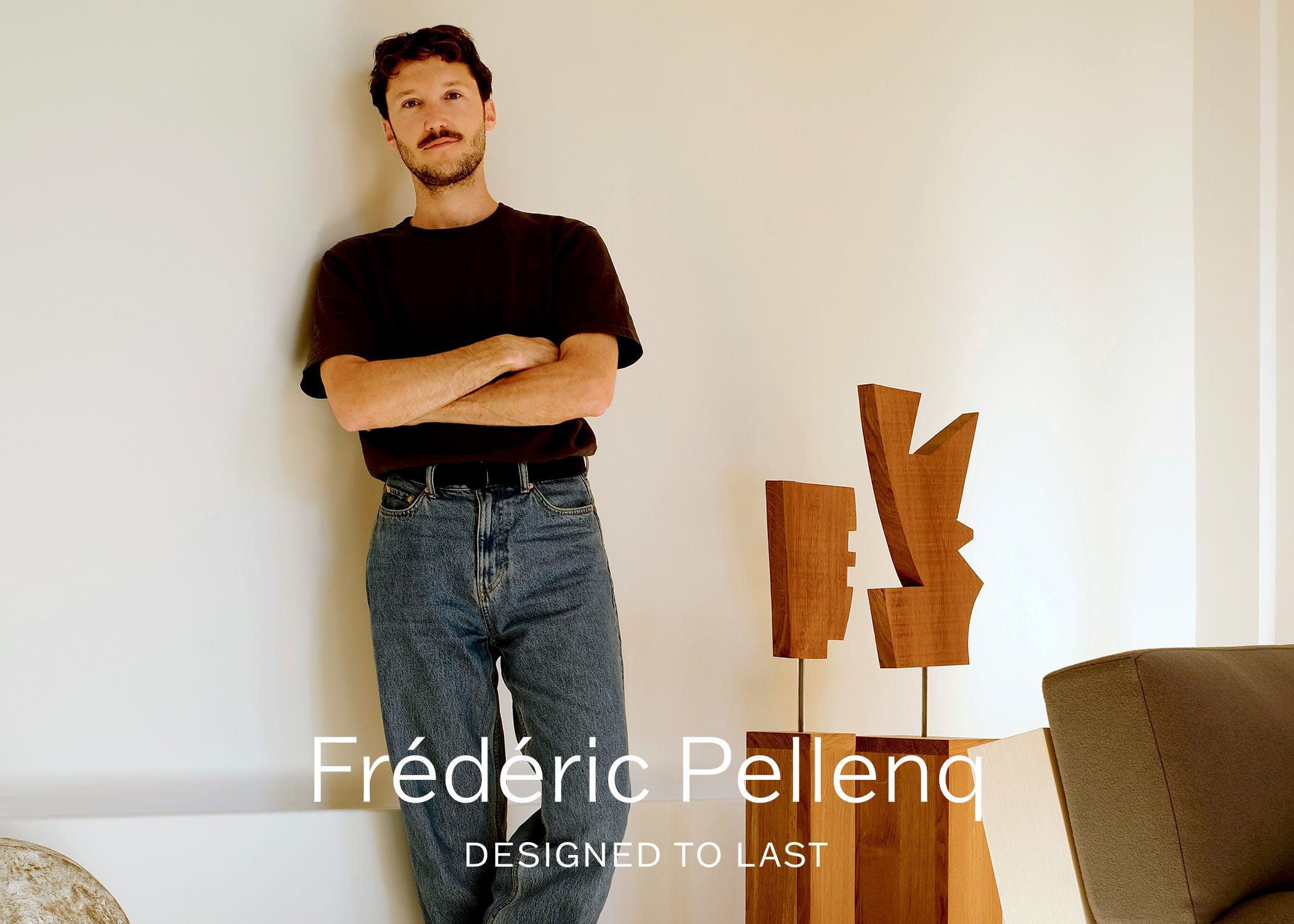
In today’s interview we cover:
Why Frédéric’s favorite designers are also architects
Escaping to the French countryside
How being represented by a gallery has evolved his process
Why wood is such an important material to him
How shape is integral to the design of an object
and much more.
Designed to Last is a fully reader-supported publication. Consider a paid subscription to support the newsletter and ensure you don’t miss out on any future articles.
Nick: Are you in Paris now, or are you in your studio?
Frédéric: Yeah, I’m in Paris, but I’m leaving for the countryside tomorrow.
Nice. How do you split your time normally?
So basically, I used to have a studio just outside of Paris for nine or ten years. That was my architecture and furniture studio where I had a workshop. I mainly worked on wood there, prototyping and doing smaller pieces, chairs and things like that.
Over the years I got bigger and bigger spaces. The last studio I had was really nice and very big. Actually a bit too big for my practice, but it was extremely nice. I was sharing it with a friend of mine who is an artist.


My boyfriend and I both grew up in the mountains, and that’s where we find inspiration. We wanted to have a different kind of life because we’ve been in Paris for fifteen or sixteen years. After some time we wanted to have more of a connection to nature.
I realized that the rent I was paying for my studio here could actually pay for a whole house in the countryside. When I realized that, I thought maybe it was the right move. So we decided to do this and we found a really nice house in the countryside, two hours away from Paris to the west.
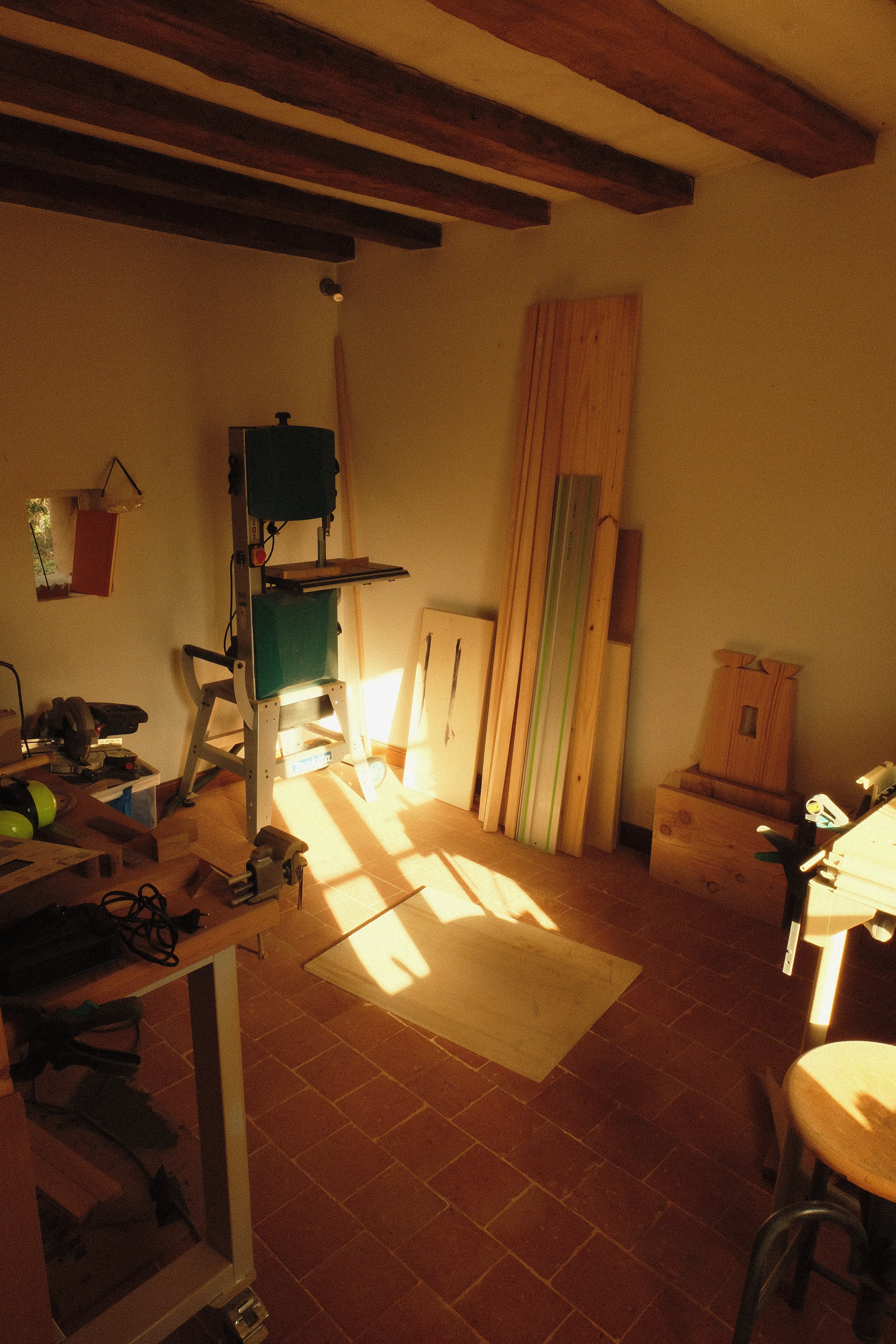
My boyfriend works in cinema production and he works in an office, but he has two remote days per week, so we usually leave Thursday evening and go back to the city Monday evening.
Yeah, that’s great to have that balance.
Yes. It’s been two years now. It’s really nice actually to have both. At some point I was really tired of Paris because it’s quite intense. Growing up in the mountains makes it harder to be based in the city.
I can definitely relate to that, being from British Columbia. I’m originally from an island nearby which is a couple hours outside of Vancouver.
Vancouver is a bit of a bigger city, but it’s not quite as dense as Paris. Still, it’s very common for people to leave after work or on weekends and go into the mountains - Whistler, Squamish, North Vancouver. There’s a lot of trail running, hiking, mountain biking.
Imagining living somewhere without mountains would be pretty difficult.
Our way of life now is actually a bit of a compromise because nature is really nice where we are, but it’s more like the English countryside, with lots of cows and animals.
It’s beautiful but not mountainous at all. Maybe in the future we will leave Paris and just come for work sometimes. Maybe the move will be to go deeper into the mountains.
One thing I’ve noticed with your work is that you use a lot of wood. I was wondering how that started and why it became such an important material for you.
I think the premise is that I skateboarded for about twenty years. I started skateboarding when I was five years old. The first contact I had with wood was actually the skateboard itself. Sometimes you repair it, sometimes you modify it, so that was my first interaction with the material.
Also growing up in the mountains, surrounded by trees, probably had an influence. The house I grew up in was originally an old farm. Both of my parents are architects. They kept the outer walls of the farm and built a new house inside. My bedroom was entirely in pine. So wood was always present in my life.


Later I studied architecture in Paris. At first I didn’t want to study architecture because I was more interested in design and furniture design. But in France design schools are mostly private and expensive, while architecture schools are public.
I also realized that many of my favorite pieces of furniture were designed by architects. Charlotte Perriand and Alvar Aalto were big influences for me, and they were both architects. So I thought architecture might be another way to approach furniture design.
During my studies my school had wood workshops that I took every semester. It was my way of beginning to work with the material. Then I discovered the work of Valentin Loellmann. He’s an artist designer who makes collectible furniture for galleries.
I fell in love with his work and wrote him a letter telling him how incredible I thought it was. I asked if I could work with him. It wasn’t very academic. I didn’t send a résumé or anything like that.
He wrote back saying it was really nice to hear that someone in France was interested in his work. So I started working for him, and that was probably the biggest turning point for me. Working as his assistant meant spending all day in a workshop making stools, chairs, sofas. It was the first time I worked in a real studio environment. The whole team was incredible. After work we would go skate together.
It felt like learning with friends while discovering how to run a studio and how to connect with galleries. That experience really shaped my practice.
With your current pieces, are you doing most of the prototyping yourself or working more with artisans now?
It depends. I’m in a bit of a pivotal moment in my practice. When I first started my studio I did everything myself because I didn’t have money or funding. All the pieces were handmade in my studio.
Then Kolkhoze Gallery began representing me and things became more serious. They started producing my pieces, which meant working with craftsmen.
That allowed me to make more complex pieces like sofas because upholstery requires specialized knowledge. For a while I stepped back from the workshop and mostly focused on design.
But in the last two years I reconnected with the studio because it’s important for me to stay physically connected to the material.
Now I separate my work into two parts. Studio pieces that I make myself, mostly in wood, and gallery pieces that are produced with craftsmen, which allows me to push the technical side much further.
Something interesting about your work is that even though the pieces are functional, they feel very sculptural. I feel like I can immediately recognize when something is made by you. Did it take time to develop that identity?
I think I always approached furniture in a sculptural way. My first pieces were actually more sculptural than functional.


When a gallery began representing me, I had to think more about comfort and usability. If someone buys a dining table they need to actually eat on it. So with gallery pieces I think more about function. But in my studio work I focus more on form and material. I like the idea that a sculpture can also have a use.
For example the chairs I rented to you for the showroom, I think of them as sculptures, even though you can sit on them.
That’s exactly how we used them. They were display pieces but people also sat on them and we moved them around.
Yes. I like when a chair can exist in a room almost like an object.
Sometimes chairs are just in the corner with books on them. Sometimes you sit on them for hours during dinner with friends.
Going back to your studies, what did you learn in architecture school that still influences your work today?
Architecture studies are very broad. I studied philosophy, art history, photography, materials. But the most important things were understanding materials, volumes, light and space.
I often think of my furniture as small architectures. When I studied architecture I communicated my ideas mostly through models. Furniture feels like a full-scale model. And I like the immediacy of it. You can design something and quickly touch it. Architecture operates on a much longer timeline.
As always, thank you for reading and supporting Designed to Last. If you haven’t already, make sure to follow us on Instagram @designed.to.last and @nicholasroethel.
Frédéric’s Instagram is @fredericpellenq and his website is fredericpellenq.fr.